

Quote and project tracking in an architecture practice is the order that keeps a job's quote, stages, revisions, and files on one job record, from the first meeting to the delivered construction drawings. In a small practice this order is often the principal's memory.
01.What does project tracking cover in an architecture practice?
Project tracking in an architecture practice means following the quote, contract, project stages, revisions, permit work, and files under the same job.
Example scenario: Picture a practice in Istanbul doing residential and interior work. One client is waiting for the preliminary design of their villa, another is in the permit process, and another wants a revision to the construction drawings. The drawing team is small; the people who talk to clients and go to the municipality are often the same people.
The drawing is not the only thing to track. Which stages the quote includes, which revision counts as in scope, when the presentation took place, which document went to the municipality, and what the client approved in which email: all of it belongs to the same job.
When these pieces sit in different places, the practice goes back to the archive with every new question. The client asks which facade option they liked last spring; the answer is in a presentation file, an email, or the project lead's memory. Project tracking gathers the answers to these questions on the record of a single job.
02.Why is the quote the document a practice loses most?
An architecture quote is the document that defines scope; when it is lost, arguments about revisions, extra work, and fees have nothing to stand on.
An architecture quote is about scope more than price: measured survey, concept, preliminary design, construction drawings, details, permit follow-up, and site supervision are separate items. The quote goes out as a text file, the client wants one item removed, a new version is prepared. Months later nobody remembers which version was signed.
This is exactly where the extra-work argument begins. The client thinks a revision is included in the quote; the practice thinks it is not. The reference is the signed quote itself, and it is sitting in an email attachment.
Another thing that gets lost is the quote awaiting a reply. The practice sends it, the client says they will think about it, and in a busy week nobody calls back. By the time someone does, the client is working with another practice. In Corex360 X AI brings the unanswered quote forward in the morning report; and you decide whether to follow up.
In Corex360 the quote is prepared on the customer card; the quote and the contract sit on the same customer card. We describe how a quote moves through the CRM in detail on the module page.
03.How do zoning status and plan notes feed into the quote?
Zoning status and plan notes decide what can be drawn; when they are read before the quote is written, the scope is set right from the start.
How much can be built on a plot, the setbacks, the height limit, and any special conditions are written in the zoning status and the plan notes. If the practice does not read them at the quote stage, a promise made to the client has to be taken back later, and that is the hardest conversation of all.
Vesya Corex Architecture, the architecture module of Corex360, brings zoning queries, plan note reading, quotes, and presentations together on the same core for architecture practices. When the zoning data sits next to the quote, the first conversation with the client rests on a document, not an assumption.
The quote is not the only place this information is needed; the whole life of the project draws on it. The same plan note is revisited when setbacks are discussed in the preliminary design, when the permit file is prepared, or when the client asks whether another storey is possible. When the document sits on the job record, nobody has to look for it again each time.
04.How are project stages tracked: preliminary, construction drawings, permit?
Each stage opens on the project record with an owner and a delivery date; when a stage closes, the next starts on its own.
In architecture the stages depend on one another. Construction drawings do not start before the preliminary design is approved, and the permit file is not complete before the construction drawings are done. When one stage slips, every later date slips with it, and the client is often the first to notice.
In the Corex360 Projects module every step has an owner and a delivery date; when a step closes, the next lands with its owner and the date goes on the calendar. If delivery is near and the step is still open, the rule opens a task for the owner and carries it into the morning briefing. The same progress shows on the customer card, so whoever talks to the client does not have to walk to the drawing desk to find out where things stand.
05.How do presentations and client meetings go on record?
Decisions taken in a presentation become the basis for the next revision when they are written on the job record the same day.
In architecture most decisions are made in meetings. In the presentation the client wants to move the kitchen, gives an opinion on the facade material, and talks openly about the budget limit for the first time. If the meeting note stays in a notebook or on the project lead's phone, people try to remember who said what while the revision is being drawn.
In Corex360 the meeting note and any photo taken during the presentation are entered from the iOS or Android app and written on the customer card. The summary email sent to the client after the meeting lands on the same card's timeline. Whoever draws the revision reads from the record which decision was taken and when, even if they were not in the meeting.
06.How do you avoid revision and file chaos?
A revision can be followed when the file sits on the job record rather than in a folder; which drawing rests on which approval is read from the record.
Files named final, final revised, and final revised client approved on the office server are a running joke in every architecture practice. The joke ends when the wrong version reaches the site.
In Corex360 files are kept in Corex Drive, inside the record they belong to. The client's approval email is filed on the customer card; X AI reads incoming email and ties the conversation to the right card. Which drawing changed after which message is read on the same record's timeline. The logic of tying a file to its record is explained in what a document management system does.
07.Where does the principal see every project?
The principal does not ask about each project; the morning report shows the waiting quote, the late stage, and the coming delivery.
In small practices the principal is both designer and manager. Part of the day goes to drawing, and part to asking whether that quote went out or whether the municipality replied. Those questions are taken from drawing time. As the practice grows, so do the questions. The project lead handles the client, the intern the drawings, the principal the municipality; everyone knows a piece of the job and nobody knows the whole. The morning report puts the pieces together in front of the principal.
In Corex360 X AI reports every morning: email read overnight, tasks opened, quotes awaiting approval, contracts about to end. This morning view is what practices most need from CRM software for an architecture practice; we told the manager's day hour by hour on that page.
We did not design this order on paper. Corex360 is the technology company of Savaş Grup, which also works in architecture; the group's practice, Vesya Architecture, keeps its project and site records on the Corex360 core. The section-drawing idea in our brand comes from the same roots.
08.How is an architecture project tracked in Corex360?
Corex360 has a vertical module for architecture firms, Vesya Corex Architecture, which handles zoning lookup, reading plan notes, proposals and presentations.
The group's architecture firm, Vesya Architecture, runs presentations, proposals, contracts, projects and customer follow-up in Corex360, and its proposals are prepared with the Vesya Corex Architecture module. Projects and finance open from the Projects and Finance tabs of the customer card. Task management counts open, overdue and completed tasks and warns about tasks at risk. Interim reports go to the customer during the project.
Sources
- Zoning Law No. 3194 (art. 21, building permit) Last checked
- Planned Areas Zoning Regulation Last checked
How was this page prepared?
- Written by: Şevket Erer, Co-founder, AI Specialist
- Sources: legislation, official body, and vendor information is taken from the primary sources in the Sources list on this page; each source shows the date it was last checked.
- Product information: sentences about Corex360 rest on the company's product fact records; unconfirmed features are not written.
- Use of AI: the Corex360 team writes the text; AI tools are used for drafting and translation. Publishing principles
- Dates: first published , last updated . Corrections policy
Frequently asked
01What is project tracking in an architecture practice?
Project tracking in an architecture practice is following a job's scope, stages, revisions, permit work, and files on one job record, from quote to delivery. The aim is to move what lives in the principal's memory onto a record the team can see.
02Which items should be listed separately in an architecture quote?
Measured survey, concept, preliminary design, construction drawings, details, permit follow-up, and site supervision are usually separate items. Stating clearly how far revisions are included also gives any extra-work discussion something to rest on.
03What does Vesya Corex Architecture do?
Vesya Corex Architecture is the Corex360 module written for architecture practices: it brings zoning queries, plan note reading, quotes, and presentations together on the same core. The quote is prepared side by side with the zoning data.
04Where should client approvals be kept?
An approval should be kept on the record of the job whose drawing it approves. In Corex360 the approval email is filed on the customer card and the drawing is tied to the same record in Corex Drive, so which version changed after which approval is read from the timeline.
05Does a small architecture practice need a CRM?
The smaller the practice, the more information collects in a few people's memory, and the work stops when one of them is away. Nobody in a small practice needs a CRM to build a sales funnel; what it must do is keep the quote, the approval, and the file tied to the job rather than to a person.
06How is the permit and municipal process followed on the project record?
The permit process is opened as a stage of the project, with an owner and an expected date, and the documents submitted to the municipality are added to the record. Correction requests coming back from the municipality are added to the same step as notes, so the permit file's history is read in one place.
We listen to your business with a few short questions and prepare a live online demo with your channels.
Related articles
Keep reading.
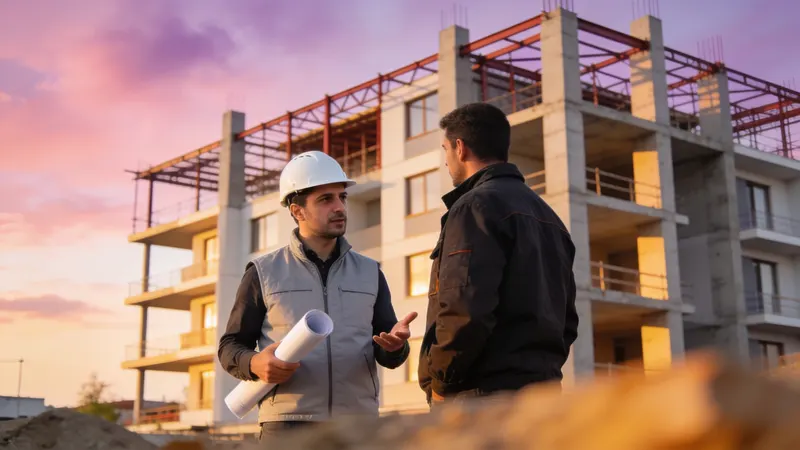
A CRM for a construction firm keeps a job's trail on one record, from survey and quote to contract, site, and interim payments, so no note gets lost.
DateRead the article01IndustryHow pool and spa companies track after-sales service
Pool and spa firms track after-sales service by keeping equipment, warranty, maintenance contract, and fault history on the customer record after handover.
DateRead the article02IndustryService business software: appointments, work orders, and collections in one flow
Service business software ties the appointment to the work order, the invoice, and the collection on one customer record, so no link is left in a notebook.
DateRead the article03FieldWhat is a route plan? Route planning for sales reps and the order of field visits
A route plan shows which customer a field rep visits on which day and in what order. It is not the same as a route, and it too often stays on paper.
DateRead the article04FieldWhat is field sales automation, and how it differs from mobile CRM
Field sales automation keeps a rep's day on one record, from plan to report; mobile CRM carries the record to the phone. Which one fits depends on the team.
DateRead the article05FieldHow to manage a field service team: work orders, routes, and reports
A field service team runs on jobs opened with a work order, assigned to the right person, and closed with a photo report, from morning job to upkeep.
DateRead the article06ProjectsWhat is project management software: opening the project when the quote is accepted
Project management software keeps steps, owners, and delivery dates in one place. Work often breaks the day a quote is accepted and moves to operations.
DateRead the article07ProjectsHow to choose project management software: deciding by the kind of work
Project management software is chosen by the kind of work: an agency, a building site, and a software team weigh different criteria, and a demo settles it.
DateRead the article08